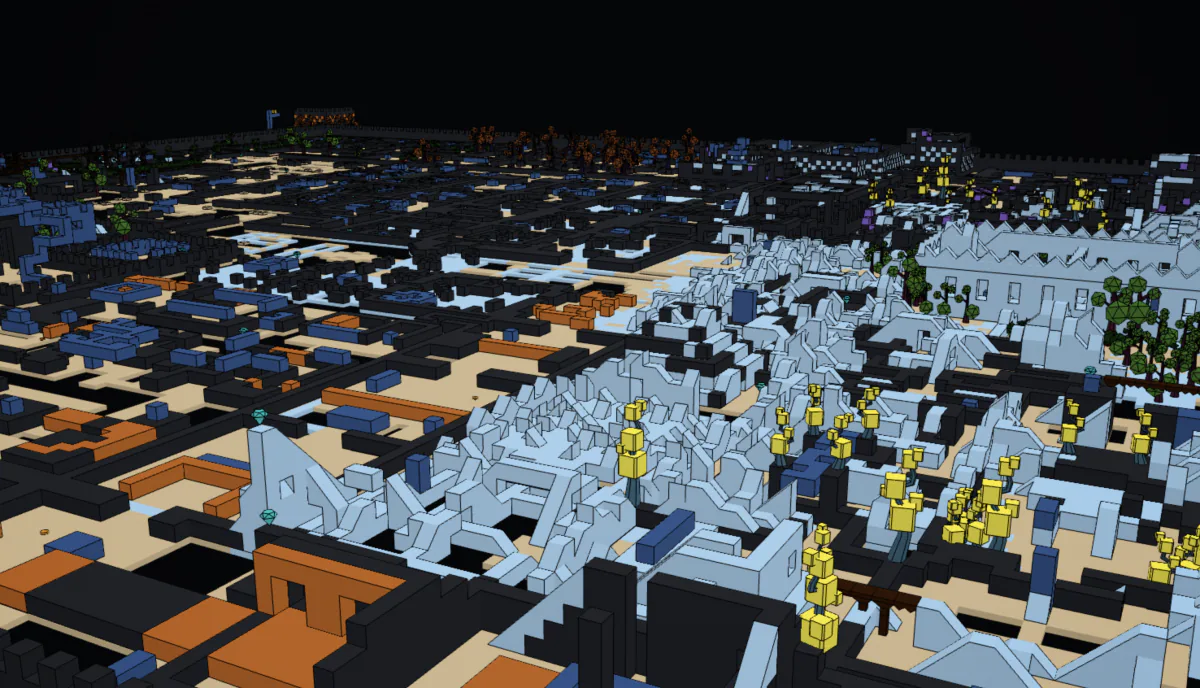
Visual Spatial Reasoning
MazeBench is an open world visual spatial reasoning environment designed to challenge frontier models with savant-level capabilities. It features a series of increasingly difficult Sokoban-style box pushing puzzles, each carefully crafted to offer something unique.

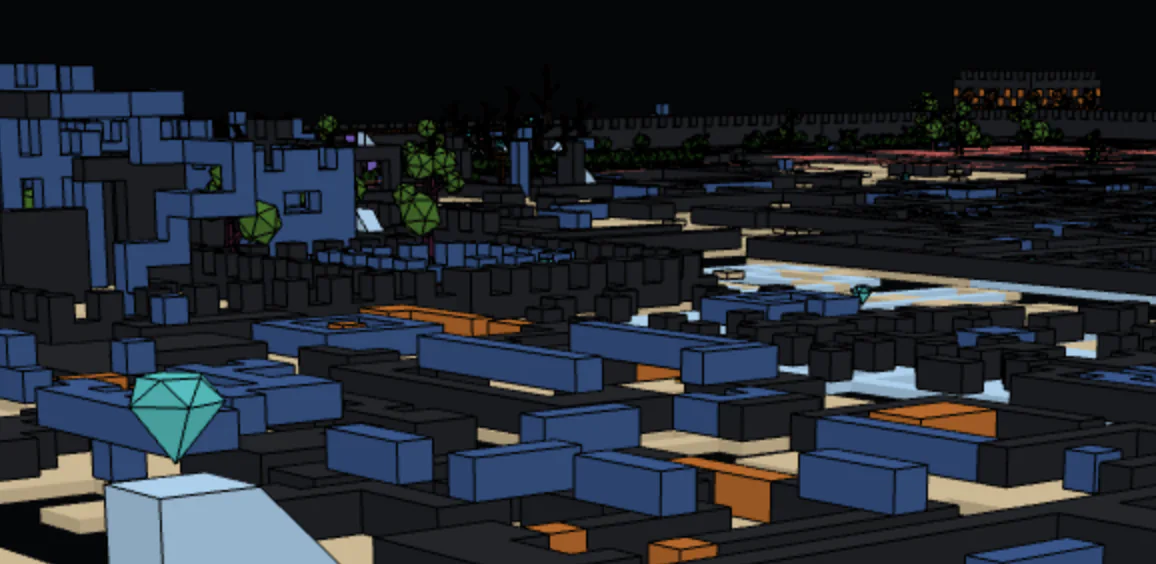
Models must explore this world to collect
100 hidden gems.
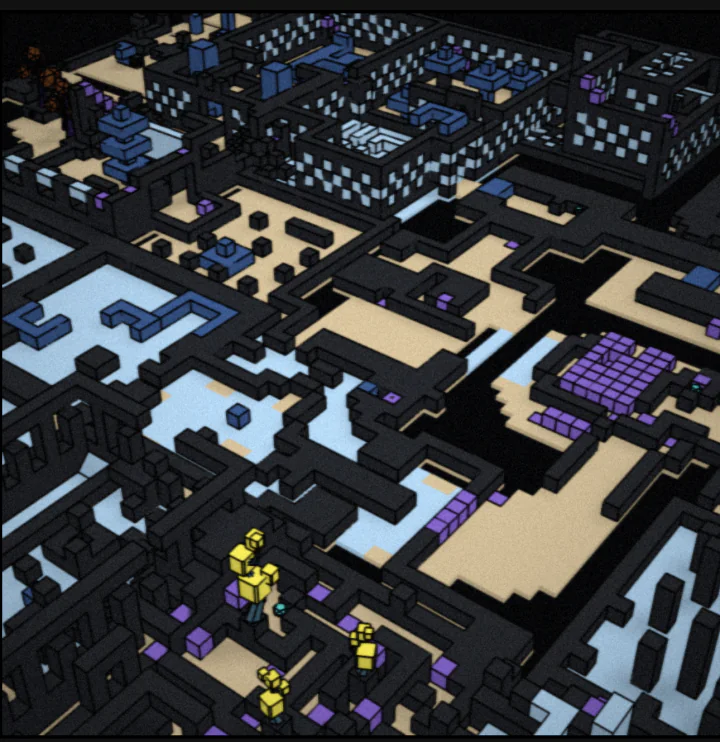
Camera Rotation
MazeBench is excellent for benchmarking multimodal models' understanding of 3D space. Sometimes important objects are obstructed from view. Models must rotate the camera to gather crucial information to solve levels.
ASCII mode
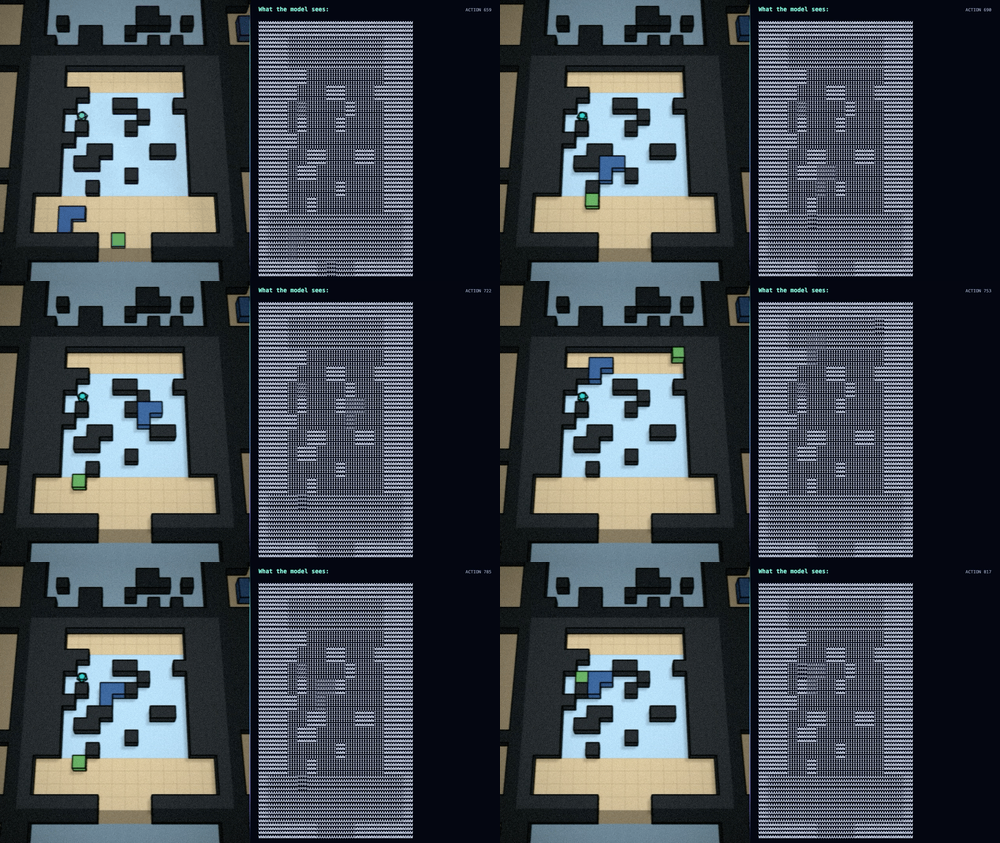
Not every model is multimodal, so we provide two separate text-only tracks: ASCII mode and JSON mode. Tool assisted models have a much easier time modeling the physics of MazeBench in text mode. Here GPT-5.6 uses ASCII mode to collect its third and final gem.
ASCII in 3D?

Since MazeBench encourages models to rotate the camera, we added camera rotation to ASCII mode as well, allowing LLMs to view the world in 20 different perspectives.
Codex
GPT-5.6 Sol Max
Tool assisted GPT-5.6 was able to explore deep into MazeBench, although it only found 3 gems. Its performance is equivalent to tool assisted Fable 5. It is twice as fast and cheap, but takes twice as many moves.